
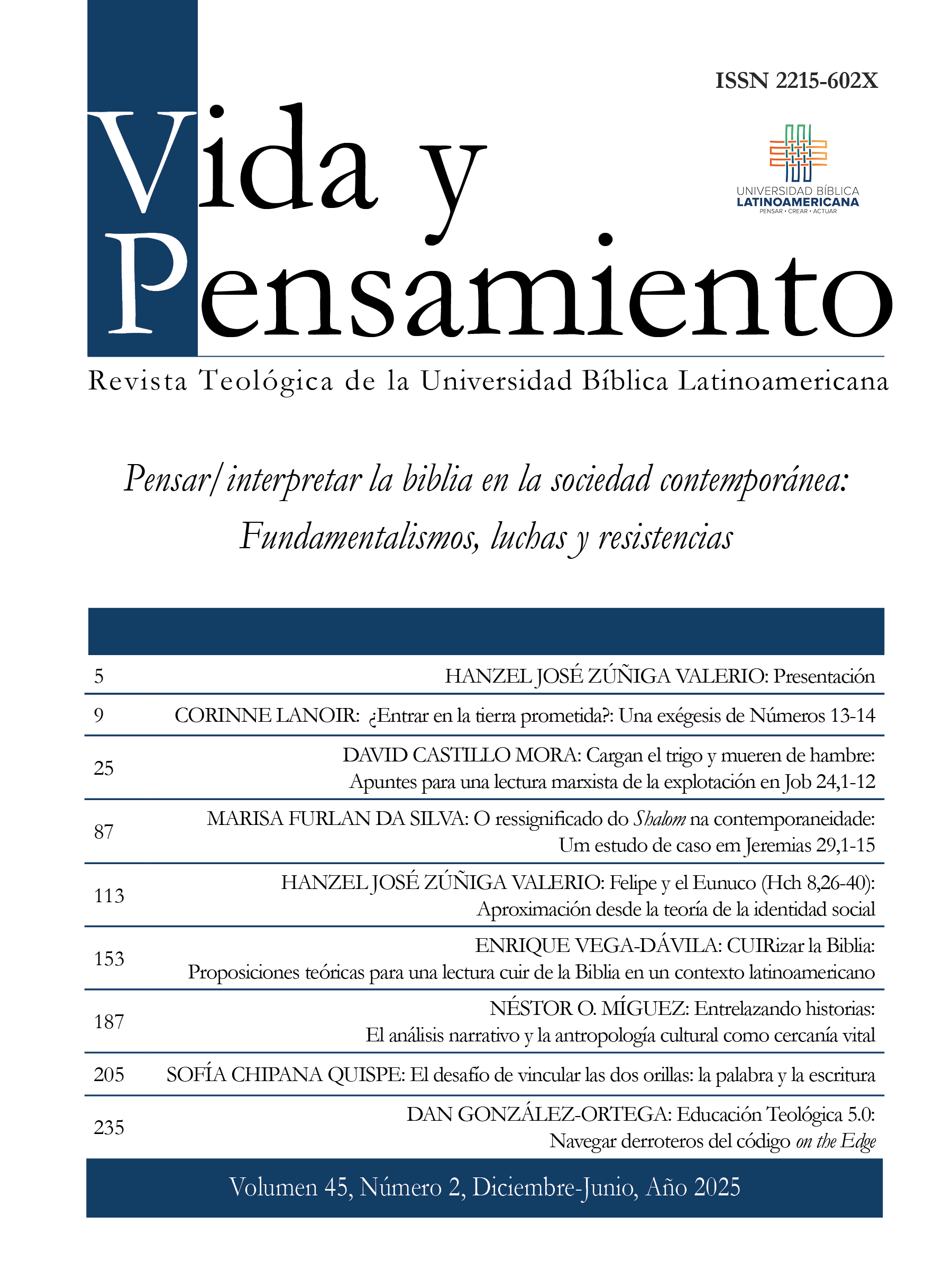
QUEERize the Bible
Theoretical propositions for a cuir reading of the Bible in a Latin American context
Abstract
This article proposes a queer hermeneutics for biblical reading in Latin America. From the author's own perspective, it criticizes the reduction of “queer” to “gay,” identity anachronisms, and the cisheteronormativity of the biblical tradition, arguing that queering is not about labeling, but rather dismantling technologies of control and opening the text to sexual and gender dissidence. To operationalize this, it formulates four moments: (1) critical-historical reading that avoids literalism and recognizes the wording and Sitz im Leben; (2) recognition of subjects and affections, integrating the option for the poor with marginalized bodies and desires; (3) reading bodies as text, where emotions and materialities are hermeneutic data; and (4) imagination and commitment, understood as the refiguration of the world of the text into practices. The exegetical example of Matthew 5:3-12 rereads the Beatitudes as political counter-discourse: not spiritual consolations, but structures of possibility for precarious lives (poverty, mourning, persecution). It concludes that a queer hermeneutics of the Bible de-hierarchizes religious normality, restores agency to ungrammatical bodies, and returns the Bible to its liberating power by articulating desire, politics, and spirituality in concrete communities today.
Downloads
Copyright (c) 2025 Enrique Vega-Dávila

This work is licensed under a Creative Commons Attribution-NonCommercial-ShareAlike 4.0 International License.
The authors who publish in this journal accept the following conditions:
- The authors retain their author rights y grant to the journal the right of first publication, with the work registered with the Creative Commons attribution that allows third parties to use the published material as long as they give appropriate credit to the author and the first publication in this journal.
-
The authors may make other independent contractual agreements for the non-exclusive distribution of the version of the article published in this journal (e.g. include it in an institutional repository or publish it in a book) as long as they clearly indicate that the work was first published in this journal.